Applications open, September 14th cohort
The Burnout Recovery Protocol
You became a healthcare worker because you cared deeply.
Burnout is what happened when that caring had nowhere to land.
The Burnout Recovery Protocol is a six-week live(virtual) group program for healthcare workers who are done managing symptoms and ready to understand what's actually happening.
From exhausted, numb and going through the motions.
To present, steadier and in a body that has stopped bracing.
Early bird rate available until September 7, 2026. Limited to 10 participants.
THE PROBLEM
If you're reading this, something is wrong. You already know that.
You're still showing up. Still doing the work. From the outside you probably look fine.
But inside something has shifted. The things that used to restore you don't anymore. Sleep doesn't touch it. Days off feel borrowed. You go home and have nothing left, not for the people you love, not for yourself.
You used to feel things at work. Satisfaction, connection, the sense that what you were doing mattered. Now you mostly feel numb. Or irritable. Or both, switching between the two without warning.
You've probably wondered if something is wrong with you. If you've lost your edge. If you chose the wrong career. If you're just not cut out for this.
You're not broken. But you are burned out. And there's a difference between those two things that nobody in your training ever explained.


Burnout is not a resilience problem.
The World Health Organization defines burnout as a syndrome resulting from chronic workplace stress that has not been successfully managed. It has three dimensions: emotional exhaustion, mental distancing from your work, and reduced professional effectiveness.
That definition is accurate. But it doesn't capture the full picture for healthcare workers.
It doesn't capture moral injury, which is what happens when you are repeatedly asked to provide care that violates your professional values. It doesn't capture cumulative grief, the weight of losses that accumulate over years of clinical work with no space to process them. And it doesn't capture the nervous system reality of a body that has been in chronic threat response for so long it no longer knows how to come out of it.
Research consistently shows burnout rates of 35 to 50 percent in healthcare workers, with some specialties significantly higher. Secondary traumatic stress, the cost of absorbing the trauma of others, directly predicts burnout severity. These are not individual failures. They are systemic outcomes.
You didn't get here because you're weak. You got here because you've been giving from a system that was never designed to replenish what it takes.
WHY MOST APPROACHES DON'T WORK
You've probably already tried the things that were supposed to help.
More sleep. Better boundaries. Mindfulness apps. A vacation. Maybe even therapy.
And maybe some of it helped, for a while. But you're still here reading this, which means it didn't get to the root of it.
Here's why. Most burnout support is built on the assumption that your nervous system has the capacity to receive it. That if you just rest enough, or reframe enough, or practice enough self-care, your system will reset.
But when your nervous system has been in chronic sympathetic overdrive or dorsal shutdown for months or years, rest can't land the way it should. Your body is still in protection mode. The window of tolerance has narrowed. And advice that works for someone with adequate resources doesn't work for someone running on empty.
Real recovery from burnout requires a different starting point. Not aspiration. Not performance. Capacity first. Then everything else.

INTRODUCING THE PROGRAM
The Burnout Recovery Protocol
Six weeks. Small group. Evidence-informed. Built specifically for healthcare workers.
This is not a wellness program. There are no gratitude journals, no toxic positivity, and no instructions to love yourself more.
The Burnout Recovery Protocol is a structured, evidence-informed group program that addresses burnout at the level it actually operates. Nervous system physiology. Moral injury. Cumulative grief. Meaning reconstruction. Relational healing.
Six weeks. Six live(virtual) sessions. A group of no more than ten people who understand what you're carrying without needing it explained.
By the end you will have accurate language for what happened to you, a real understanding of your nervous system's response to chronic stress, tools for building genuine regulation capacity, a framework for processing the moral injury and grief that sit beneath the burnout, and a personal integration plan that is honest about what ongoing wellbeing actually looks like.
Not a return to who you were before. Something more sustainable than that.
Research on this kind of structured group work consistently shows that the physical shifts surprise people most. Sleep that actually lands. Chronic pain that begins to reduce. A nervous system that stops bracing. But the moment people describe as the real turning point is simpler than that. It is the moment they stop explaining their exhaustion as a personal failing and start seeing it accurately, as a predictable response to an impossible amount. Something releases when that happens. And the body follows.
THE SIX MODULES
Here's what the six weeks look like.
You'll finally have accurate language for what you're experiencing. We name burnout as a physiological and systemic reality, not a personal failure, so you can stop blaming yourself and start understanding what you're actually dealing with. You leave this module with accurate language for what happened to you, and the beginning of something that feels like relief.
You'll understand why "just relax" has never worked and what building real regulation capacity actually looks like. This is the module that makes everything else possible. You leave this module with a daily practice and a different relationship to your own body.
We go beneath the surface of burnout to the layers most programs ignore: moral injury, cumulative grief, and the compounding cost of giving care inside systems that were never designed to care for you. You leave this module having named what has been unnamed, and feeling, often for the first time, genuinely witnessed.
We separate genuine recovery from the wellness industry's version of it. This module helps you reconnect with what actually matters — rest, meaning, joy, and the reason you came into this work in the first place. You leave this module with a clearer sense of what actually matters to you and one specific, actionable way to move toward it.
Because healing is relational, not individual. We map the support structures that make sustained recovery possible and identify the one concrete gap you need to address first. You leave this module having practiced receiving, and with a concrete plan to build the support your recovery actually requires.
The goal isn't to return to who you were before burnout. This final module builds your personal integration plan and gives you honest, realistic language for what ongoing wellbeing actually looks like from here. You leave this program not back to who you were before. You leave as someone who knows what they are carrying, what they are putting down, and what comes next.
What's included in your enrollment:
What actually changes
Drawn from clinical research and the reality of this work.
You stop waking up exhausted
When your nervous system is stuck in chronic activation, sleep does not restore you because your body never gets the signal it is safe. Research shows that addressing nervous system regulation directly improves sleep quality — not because the shifts got easier, but because your body finally gets to complete what it started.
The numbness starts to lift
Depersonalisation, going through the motions, feeling disconnected from patients you used to care deeply about, is not a character change. It is a protective response from a nervous system in chronic overload. When the load reduces and the cycle completes, the capacity to feel comes back. Not all at once. But it comes back.
You have language for what happened
One of the most consistent things people report after this kind of work is that they finally have words for something they have been carrying for years. Moral injury. Cumulative grief. Secondary traumatic stress. These are not weakness. They are specific, named experiences with specific pathways through. Naming them is not a small thing. It is where everything else begins.
The physical symptoms start to make sense
Chronic pain, gut problems, recurring illness, exhaustion that sleep does not touch — these are not separate from burnout. Burnout is a prospective predictor of cardiovascular disease, musculoskeletal pain, fibromyalgia, immune dysfunction, and type 2 diabetes. When the nervous system begins to regulate, the body that has been holding the story begins to shift.
You stop carrying what is not yours
The moral accounting work in this program is specific: what was I forced into? What did the system ask me to absorb that I never actually agreed to carry? When people can answer that honestly, something releases. The weight of self-blame — which was never accurate — begins to lift. And what is underneath it is usually grief and anger, which can move.
You remember why you came into this work
Not everyone finds this. But many do. Somewhere in the second half of this program, when the nervous system has more capacity and the invisible load has been named, there is often a moment of reconnection. Not to the version of this work that burned you out. To the original impulse — the thing that made you choose it. That impulse was not wrong. It just needs a different container.
What this work looks like in practice
The following are research-based illustrations drawn from the clinical literature and Zoe's work with healthcare teams. They are not accounts of specific individuals.
The nurse who stopped sleeping
A pediatric ICU nurse who has not slept through the night in eight months. She has had two courses of antibiotics this year and has started to wonder if something is wrong with her immune system. In Week 2 she learns that her body is biologically stuck in activation, that the stress response never completed after shift after shift of witnessing suffering. She begins a 30-minute movement practice. Within three weeks she sleeps through the night for the first time in months. Not because her shifts changed. Because her body finally got the signal it survived.
The midwife with chronic pain
A midwife who has been diagnosed with fibromyalgia and is quietly wondering if she will have to leave the profession. She has been told it is separate from work stress. It does not feel separate. In Module 1 she hears that fibromyalgia is documented in the clinical literature as a somatic consequence of chronic unresolved nervous system activation. In Module 2 she learns that her body has been trying to complete stress cycles that were never given space to finish. Over six weeks her pain does not disappear. But it reduces. More importantly, she stops feeling like her body has betrayed her. She starts feeling like her body has been trying to tell her something she finally has words for.
The social worker who stayed too long
A social worker fifteen years in who entered the profession wanting to change the world and has spent the last five years feeling like a bureaucrat. She comes into Week 4 not expecting much from the meaning module. The values clarification exercise stops her. The question is simply: when did you last feel most yourself? She realises the answer is twenty years ago, before the paperwork, before the metrics. She does not leave her job at the end of the six weeks. But she identifies one thing within her sphere that she can change, one specific advocacy action this week for one specific client. According to the research on meaning and burnout recovery, that is not a small thing. That is the whole thing.
The nurse whose labs kept coming back normal
A nurse who has been to her GP three times in two years. Fatigue. Headaches. A feeling she can only describe as being underwater. Every time the labs come back clean. She is told she is healthy. She does not feel healthy. She starts to wonder if she is imagining it, or if something is wrong with her that medicine cannot find. In Module 1 she learns that burnout is a physiological state that standard bloodwork is not designed to detect. That a nervous system in chronic activation produces symptoms that are entirely real and entirely invisible to conventional screening. In Module 2 she learns what her body has actually been trying to do. By Week 4 she has stopped searching for a diagnosis that will finally validate what she already knows. She already knows. She just needed someone to confirm it was real.
This program was built for you if:
- ✓You work in healthcare, allied health, or a caring profession and you are exhausted in a way that rest doesn't fix.
- ✓You have tried managing your burnout on your own and it keeps coming back.
- ✓You know something needs to change but you don't have the language for what's actually happening.
- ✓You want support that takes the systemic context seriously, not just your individual coping strategies.
- ✓You are ready to do real work in a small, supported group.
This program is not right for you if:
- ✕You are in acute crisis and need immediate individual clinical support. If this is you, please book a free connection call instead and we will find the right support together.
- ✕You are looking for a quick fix or a list of tips to feel better by next week.
- ✕You are not ready to engage with the possibility that your recovery involves more than self-care.
Who is leading this program and why it matters
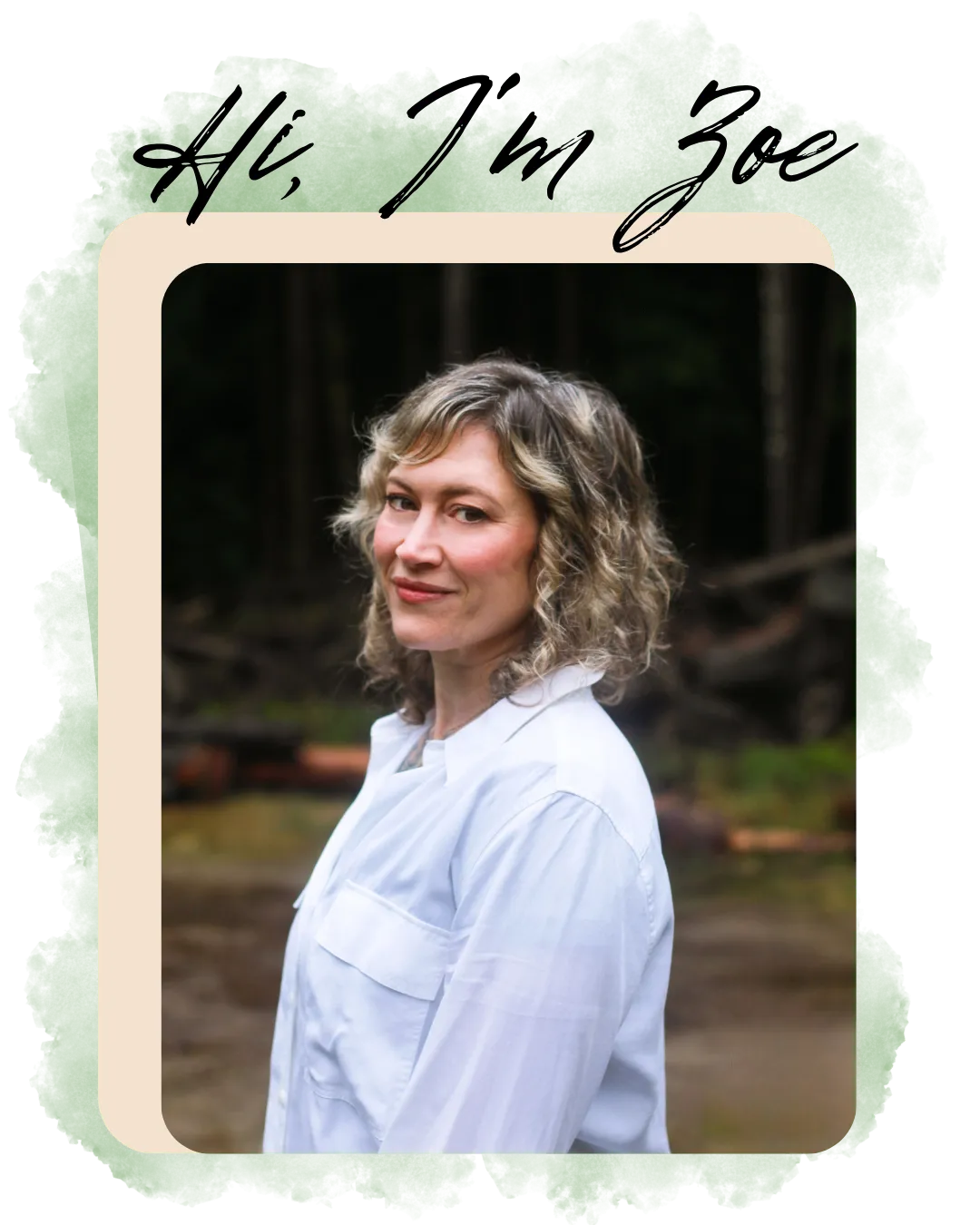
My understanding of burnout in healthcare didn't come from a textbook.
It came from watching a dear friend who works in healthcare as a midwife carry the weight of professional grief with nowhere to put it. It came from walking into hospital after hospital to teach about perinatal loss and sitting with nurses, physicians, social workers, and allied health workers who were holding death, trauma, and moral injury as part of their daily work. I got a front row seat that most people never see.
I watched what it costs to care inside systems that were never designed to support the people working within them. I watched colleagues quietly fall apart. I watched the way grief accumulates in healthcare workers with no space to land. And I watched what happened when someone finally gave that experience an honest container.
That is why I built The Burnout Recovery Protocol. Not from theory. From years of witnessing.
I am a counsellor, coach, and educator based in BC. I have delivered training on perinatal loss and burnout at Sechelt Hospital, qathet Hospital, Squamish Hospital, HOPE Centre at Lions Gate Hospital, and the Butterfly Support Network. I am speaking at the Rural Health Conference in Prince George in May 2026.
My work draws on nervous system science, somatic embodiment practices, moral injury research, and grief literacy. It is justice-conscious, trauma-informed, and does not ask you to find silver linings.
What colleagues say about working with Zoe
Zoe brings deep compassion, tenderness, and understanding to grief work. Her lived experience, creativity, and gentle presence help clients feel seen in their pain while finding meaning, remembrance, and hope as they move forward. 10/10 recommend!
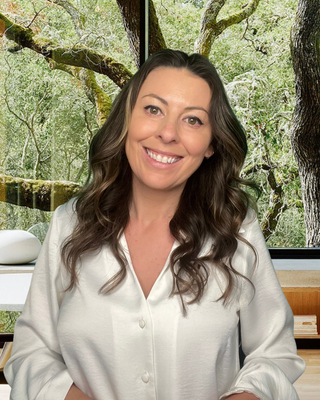
Zoe Stratis is a dedicated and trusted leader in infant loss grief. She uses her own journey and expertise to support others with heart and humility. Her passion and trauma-informed care make her a trusted guide through life's hardest moment.
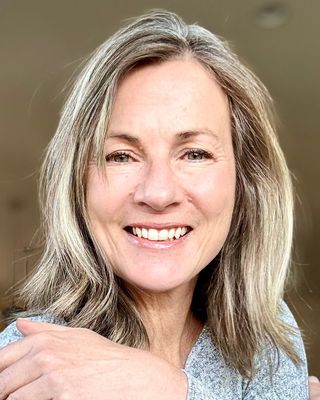
Zoe is passionate and highly knowledgable in her specialties of grief, bereavement, perinatal loss and perinatal mental health. Zoe's approach is eclectic, drawing from many modalities to best help her clients. You can trust Zoe as a guide in your journey.
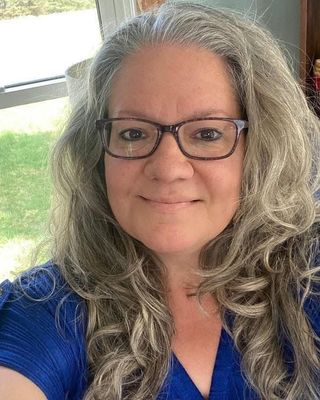
Zoe is so knowledgeable in her field of specialty. I highly recommend her as a therapist for grief, loss, and pregnancy and infant loss.
Your investment (Wait List)
Your investment
The Burnout Recovery Protocol is priced to be accessible to working healthcare professionals while reflecting the depth and structure of what is being offered.
This is the founding cohort of The Burnout Recovery Protocol. Pricing reflects that. Future cohorts will be priced to reflect participant outcomes and program depth.
Sessions run on Mondays at 3pm PT / 6pm ET. If that does not work for your schedule, join the waitlist and tell us what does. New cohort times open based on demand.
The September 14th Cohort is limited to 10 participants. When it's full, it's full.
Your investment
The Burnout Recovery Protocol is priced to be accessible to working healthcare professionals while reflecting the depth and structure of what is being offered.
This is the founding cohort of The Burnout Recovery Protocol. Pricing reflects that. Future cohorts will be priced to reflect participant outcomes and program depth.
Rural Health Conference attendees: use code RURALHEALTH for full payment and use code RURALHEALTHPYMNTPLAN for Payment Plan at checkout for $100 off.
Sessions run on Mondays at 3pm PT / 6pm ET. If that does not work for your schedule, join the waitlist and tell us what does. New cohort times open based on demand.
The September 14th Cohort is limited to 10 participants. When it's full, it's full.
The [DATE TBC] cohort is limited to 10 participants. When it's full it's full.
The Guarantee
If it's not right for you, you won't be stuck.
Complete the first two modules. Attend both live(Virtual) sessions. Do the reflection work. If after that you genuinely feel this program is not the right fit for you, contact Zoe within 14 days of module two and receive a full refund, no questions asked.
This guarantee exists because I am confident in the work. And because I'd rather you trust the process than worry about the risk.
Questions people ask before joining
Q: WHAT IS THE TIME COMMITMENT?
One 90-minute live(virtual) session per week for six weeks, plus time to work through the weekly module at your own pace. Most participants spend two to three hours per week total.
Q: ARE SESSIONS RECORDED?
No. Live(virtual) sessions are not recorded. This is a deliberate choice to protect the privacy and psychological safety of all participants. If you miss a session a written summary and reflection prompts will be posted in The Recovery Room community space within 24 hours.
Q: WHAT IF I HAVE TO MISS A SESSION?
Life in healthcare is unpredictable. If you need to miss a session, let Zoe know in advance. The weekly module materials cover all core content. You won't fall behind on the learning, and the group will welcome you back the following week.
Q: IS THIS THERAPY?
The Burnout Recovery Protocol is a coaching and educational program, not therapy. It is available to participants worldwide. If you are a BC resident seeking clinical counselling support, that is available through Zoe's individual counselling practice. Book a free connection call to discuss which is the right fit.
Q: WHAT IF I'M NOT SURE A GROUP IS RIGHT FOR ME?
Most people who are nervous about groups find that the small size, maximum 10 participants, and the shared professional context makes it feel different from what they expected. If you're genuinely unsure, book a free connection call and we can talk it through.
Q: WHEN DO LIVE SESSIONS TAKE PLACE?
The September 14th cohort runs on Mondays at 3pm PT. The final session time will be confirmed with participants before the first session via a group poll. If Mondays at 3pm PT do not work for your schedule, join the waitlist and tell us what does. New cohort times open based on demand. Please keep in mind that it is a virtual program and NOT in person.
Q: WHAT TECHNOLOGY DO I NEED?
Zoom for live sessions and a device to access the online course materials. That's it.
Q: CAN I JOIN IF I'M OUTSIDE CANADA?
Yes. The Burnout Recovery Protocol is a coaching program available worldwide.
Q: WHAT IF I'M IN THE MIDDLE OF A REALLY HARD SEASON RIGHT NOW?
If you are in acute crisis or need immediate support, this program is not the right starting point. Please book a free connection call instead. If you are depleted and struggling but functional, that is exactly who this program was designed for.
You've been taking care of everyone else for a long time.
The Burnout Recovery Protocol is six weeks of showing up for yourself, in a room with people who understand what you carry, guided by someone who has been sitting with this work for years.
The cohort opens now. It closes when it's full or on September 14, whichever comes first.
Early bird rate $747 CAD until September 7. Regular rate $897 CAD after.
From exhausted, numb and going through the motions. To present, purposeful and in a body you can trust again. Six weeks. Ten people. The real work.
Not sure yet? Book a free 15-minute connection call first.
Copyright © 2026 Wilder Way Counselling | Privacy Policy